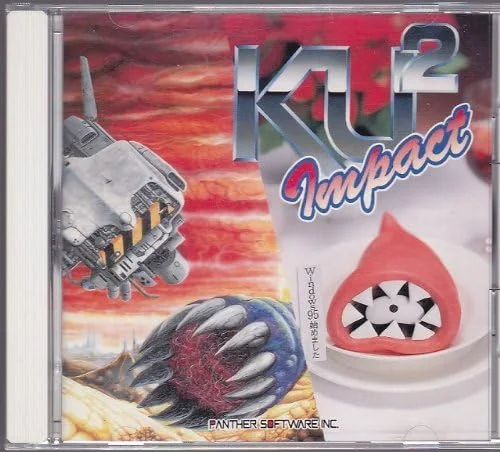
Details
- Released
- 1995
- Developer
- Panther Software
- Publisher
- Panther Software
- Genre
- Shooter / Scrolling shoot'em up
- Players
- Up to 1; single player
- Type
- Commercial
- Platform
- Windows 9x
- Pack
- eXoWin9x
- Manual
- Not included
Stories
No one has written about KU2 Impact yet.
Screenshots
About this game
(Description from old-games.ru)
It's no secret that East Asians love SHMAPs (shoot 'em ups). It seems every self-respecting company from there feels obligated to try their hand at this genre. The first, so to speak, "beta" version of KU2, from the Japanese team Panther Software, was released in 1992 for the Sharp X68000 platform, and the full release followed in 1993. That same year, another version was released for the FM Towns platform. It only made its way to the PC in 1995, and that was purely by chance: FM Towns turned out to be quite compatible with Windows 95 and DirectX, so adaptation didn't take long. Despite numerous editions, the game remained limited to the Japanese market until 1997, when LG financed a re-release in South Korea with local translation.
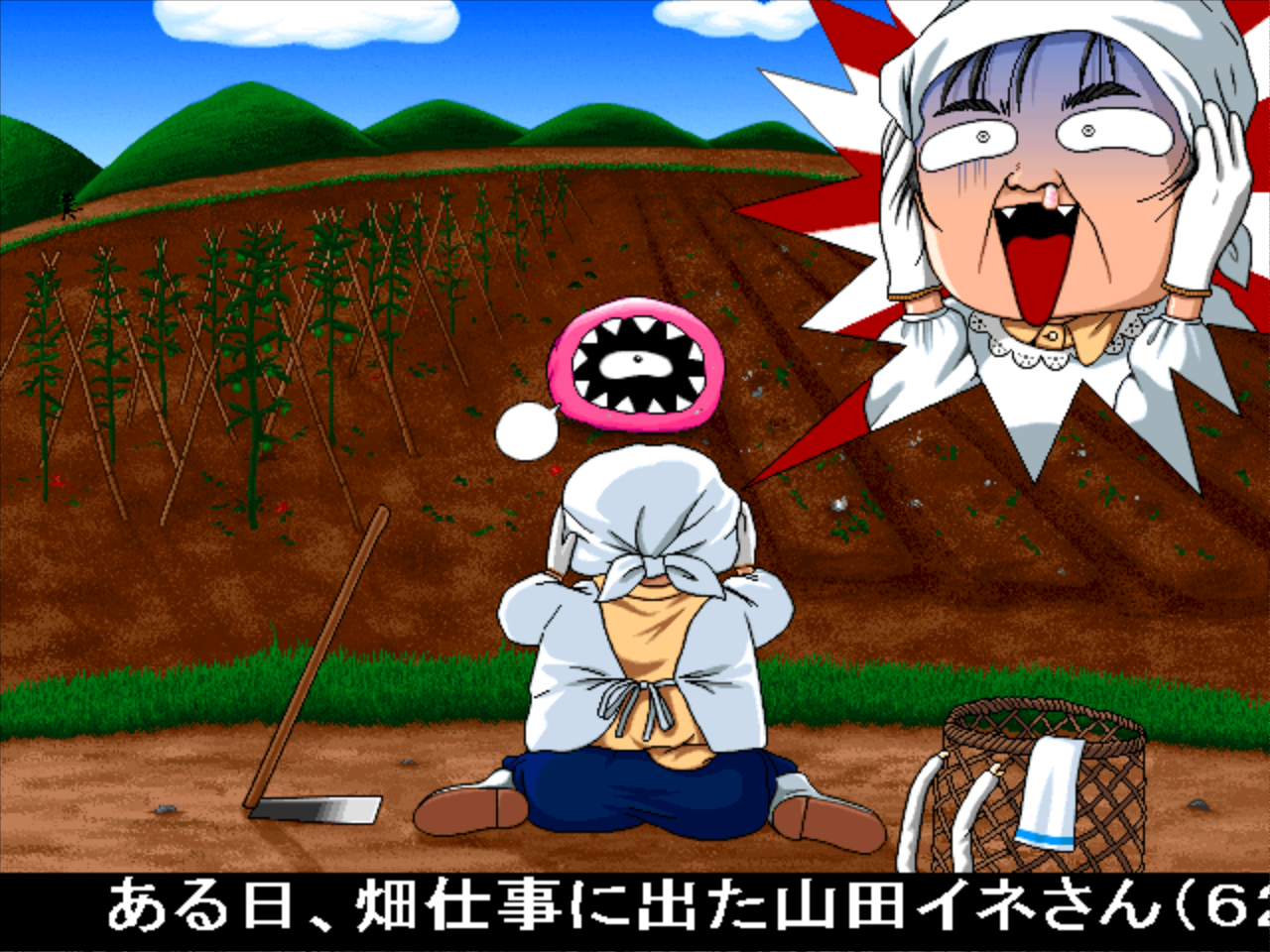
In fact, there are two games under the same name, which is likely where the "2" in the title comes from. Although the developers suggest considering these simply two modes: serious and comic. Each has its own plot, design, locations, and even the gameplay mechanics differ in detail. The only commonalities are the genre (vertical-scrolling shooter), the principles of progression and leveling, and the presence of KU creatures.
You'll have to fight your way to your goal over the course of a dozen levels. Each has its own unique style, with a wide variety of enemies, and, of course, a unique boss at the end of each. I'm not sure who would dare call this wreck of dubious combat qualities under our direct control an "advanced spaceship." The weapons are weak, maneuverability is terrible, and it falls apart completely from any enemy hit. But now it's clear why we're losing the war. Therefore, it's critical to pick up bonuses throughout the mission, which will significantly improve the ship's speed, weapon power, or even change its type. There are only four types of bonuses: one for mobility and three for attack. The latter differ primarily in how damage is distributed: a beam aimed directly at the ship, strong projectiles aimed at the ship, weaker homing projectiles, and fire over a wide area without homing. Bonuses, incidentally, are not easy to collect, as they constantly move and cyclically change their type. If you grab something that matches your current weapon, it will level up, but if you grab a bonus of a different type, it will be replaced with a corresponding upgrade. But there's no way to increase our survivability. One hit or collision takes away one life. We're immediately reborn, but we lose one point of damage and one point of speed. And when we run out of lives, we have to start the level over. There are no saves, by the way. The only slight concession is that upon successful completion of a mission, the leveling and accumulated lives are carried over to the next stage.
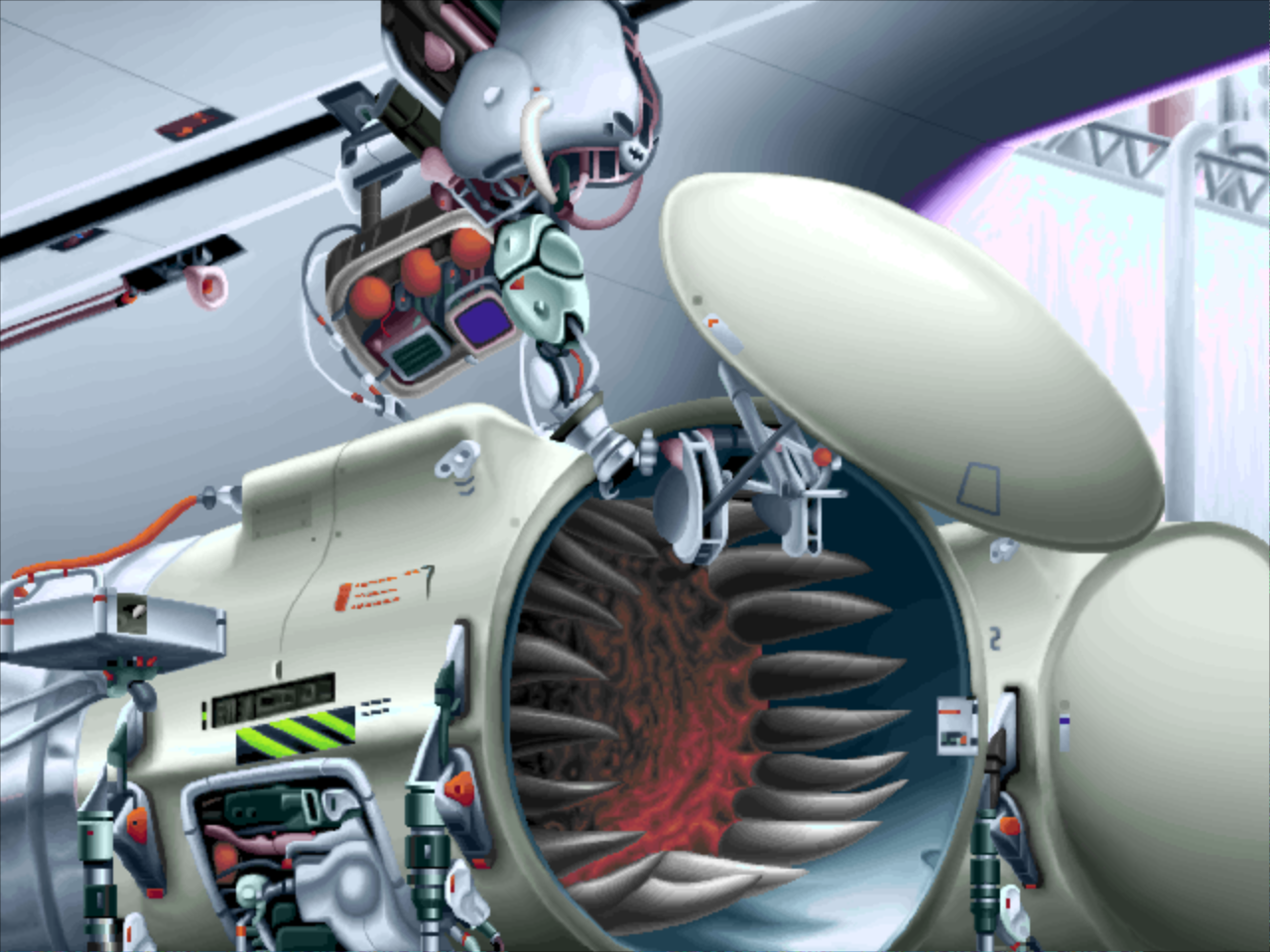
The graphics are completely 2D and aren't exactly stellar. The backgrounds are poorly designed, and the enemies' effects range from well-done to less so. In the later stages, with the overwhelming number of enemies and projectiles on screen, it's difficult to keep track of your ship's exact position. However, considering the game's original release year, everything looks good. The soundtrack is of a completely ordinary quality for the era. The catchy electronic music tracks are appropriate and set the right mood.